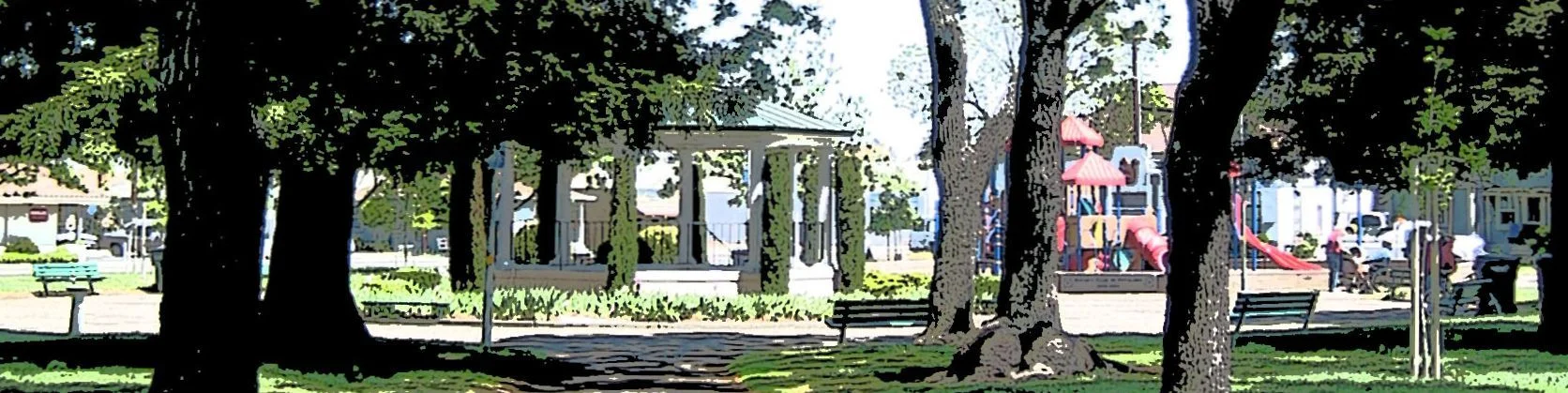
Plazas, Parks, and Playgrounds
The existence and forms of a city's parks are rooted in national ideas about shared public spaces. The appearance of any park is tempered by local conditions and, just as importantly, by the practical constraints of budgets and political will. Parks in towns often started with public plazas in older cities, progressing to parks. Playgrounds were a later development, around the 1920s.
Ideas about the purpose of parks continue to change, just as our cultural, spiritual, aesthetic, and ecological needs do. Expectations about the value and use of parks continue to evolve. In many towns, sport fields, playgrounds, and dog parks are the most used park spaces. More passive park uses, and parks as habitat protection areas and open space or land trust areas, are examples of emerging uses. Sometimes manufacturing and transport landscapes are converted to recreational uses. Undeveloped parks and public areas may sprout habitat gardens and community food gardens. Resiliency in the face of climate change is another evolving change to landscapes that also function as parkland.
Join the authors, Janet Gracyk and Katherine Rinehart, in an exploration of the history of parks in one Northern California town. This project is ongoing.
If you have observations, corrections, additional information, please contact us via the CONTACT PAGE.